
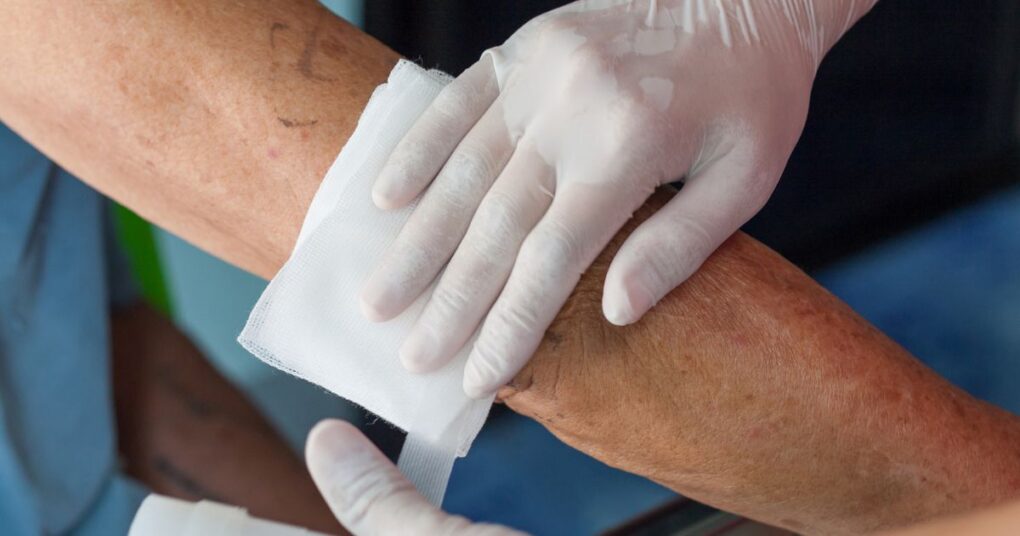
Sometimes after a hospital stay or long-term illness, complex wounds can take longer to heal. This can feel overwhelming, but with the right support these wounds can be treated while helping your loved one on the road to recovery. Comprehensive wound care during post-hospital rehabilitation can allow wounds to heal while keeping your loved one as comfortable as possible. At The Healthcare Center at Buck Creek, our interdisciplinary team provides advanced wound care with a compassionate, personalized approach.
What You Need to Know About Advanced Wound Care:
- Advanced wound care is specialized treatment for complex wounds that don’t heal on their own.
- Advanced techniques include debridement, negative pressure wound therapy, and MIST therapy.
- Our wound care team includes a wound care physician who makes bedside visits.
Table of Contents
What Is Advanced Wound Care in Skilled Nursing?
Advanced Wound Care Treatments at Buck Creek
What Is Advanced Wound Care in Skilled Nursing?
Advanced wound care is specialized treatment to help wounds heal or stop getting worse. It goes beyond ointments and dressings to advanced techniques including debridement, pressure relief, and gentle suction technologies. A comprehensive approach includes nutritional support, so the body has the raw materials it needs to rebuild tissue. The types of wounds that often require advanced care include:
- Stage 3 and Stage 4 pressure injuries
- Surgical wounds that won’t heal
- Diabetic foot ulcers
- Circulation-related ulcers in the lower legs
- Traumatic wounds on fragile skin
Many of these wounds develop in the hospital during an ICU stay or after surgery. In some cases, they only become visible days after discharge. Pressure injuries can start below the surface and erupt later. Surgical wounds may stop healing. Post-hospital recovery in Short-Term Rehab lets an experienced care team catch changes before the wound requires complex treatment.
Why Some Wounds Don’t Heal
Wound healing usually happens in stages, but if all the conditions aren’t just right, it stalls. Dead tissue builds up, blocking new growth and harboring bacteria that lead to infections. It must be removed to allow healing to continue.
Maintaining the correct conditions for healing can be a balancing act. The wound needs just enough moisture to allow new cells to travel across it. But if it’s too wet, the surrounding skin can start breaking down. Managing moisture levels is often easier in Skilled Nursing compared to Home Health because nursing supervision is available around the clock.
Good nutrition, hydration, and blood sugar control support natural healing processes. Blood delivers nutrients, oxygen, and immune cells to the wound and helps keep it hydrated. Poor circulation means the wound receives less of what it needs to heal.
Getting your loved one to eat and drink enough can be challenging when they’re in pain, tired, or not feeling well. Skilled Nursing support can fine-tune a resident’s nutrition and provide IV hydration if needed.
Advanced Wound Care Treatments at Buck Creek
As a high-acuity Skilled Nursing Center, our complex medical capabilities include direct wound care along with supportive therapies. Those therapies can include IV antibiotics, enteral tube feeding, and IV fluids delivered every eight hours.
We provide every treatment below to a person, not a wound, and our team pays attention to comfort and dignity along the way.
Bedside Debridement
Debridement is the removal of dead tissue to prevent infections and allow new tissue to grow. Our debridement methods include:
- Autolytic: Moist dressings designed to encourage the body’s own enzymes to do the work
- Enzymatic: A prescription ointment that dissolves dead tissue
- Mechanical: Physical removal using pressurized water or specialized pads
Negative Pressure Wound Therapy
Also known as vacuum therapy, negative pressure wound therapy involves attaching a pump to a sealed dressing and applying gentle suction. The suction can reduce swelling and encourage new tissue to form from the bottom up. For more complex wounds, V.A.C. Veraflo therapy adds the step of instilling a topical solution into the wound before suctioning it off. Not every Skilled Nursing Facility offers it, so ask about it by name if your loved one’s wound is complex.
MIST Therapy
MIST Therapy is wound cleansing by ultrasound delivered through a fine saline mist. Since nothing touches the wound, the procedure is painless.
Management of Advanced Pressure Injuries
Stage 3 and Stage 4 pressure injuries require consistent daily management. At Buck Creek, post-acute care includes:
- Pressure-relieving mattresses and cushions
- A frequent repositioning schedule
- Daily skin checks
- Nutrition support as needed
The Team Behind the Treatment
At Buck Creek, it’s not just about the medical services we provide. It’s about the people who deliver them. Our interdisciplinary team works together on personalized wound treatment and includes:
- Wound care physician who makes bedside visits
- Nurse practitioner wound care specialists
- Registered Dietitian
If your loved one has a wound that doesn’t seem to be getting better, it may be time for more support. We’re here for you every step of the way. Reach out to our team today to speak to an advisor about advanced wound care at Buck Creek.