
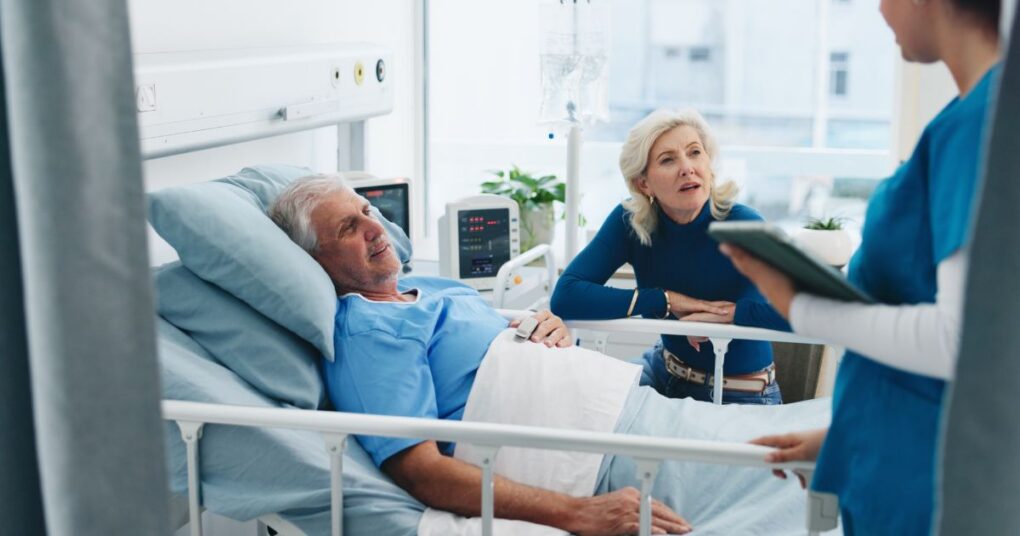
Patients often hope to go home when leaving the hospital, but a Skilled Nursing Facility (SNF) after hospitalization is often the more clinically appropriate option. There may be pressure to make fast decisions at the end of a hospital stay, and this guide can help you quickly recognize the most common signs a patient meets SNF discharge criteria.
Our clinical capabilities at The Healthcare Center at Buck Creek allow us to provide complex medical care where compassion meets excellence. As a responsive referral partner, our admissions team can review your patient’s circumstances and facilitate a smooth admissions process from start to finish.
Key Takeaways: When Skilled Nursing is Needed
- Patients with complex medical conditions may have a lower risk of readmission if they are discharged to Skilled Nursing after hospitalization.
- Safety concerns like falling and cognitive decline may mean your patient meets SNF discharge criteria.
- If your patient needs round-the-clock care, it’s important to evaluate any family caregiver’s realistic ability to meet those needs before choosing an option.
Table of Contents
Complex Medical Conditions that May Affect Readmission Risk after Discharge
Safety and Mobility Concerns to Consider During Post-Acute Discharge Planning
Support Between Home Health Visits: Is It Enough?
Make Your Next Hospital Discharge to Skilled Nursing with Confidence
Complex Medical Conditions that May Affect Readmission Risk after Discharge
The Centers for Medicare and Medicaid Services track the readmission risk after discharge for six complex medical conditions. With hospitals facing penalties for readmissions, this puts added pressure on discharge planners.
Other than total joint replacement, these conditions are all heart and lung conditions, such as COPD and heart failure. However, these aren’t the only complex cases. If you have a patient with the following conditions, consider Skilled Nursing after hospitalization:
- Wounds that need advanced care: Stage 3 and 4 pressure injuries and other wounds that need debridement, negative pressure therapy, or MIST therapy
- Advanced medication requirements: IV medications, PICC lines, and complex medication schedules
- Diabetes complications: Severe peripheral neuropathy, vision loss, reduced kidney function, or a history of critical blood sugar incidents
- Multiple comorbidities: Chronic or acute conditions that require clinical monitoring or medication management, especially if at least one requires oxygen support or advanced cardiac monitoring
- Reduced immunity: Autoimmune conditions like lupus or a history of sepsis
- Specialized nutrition needs: dysphagia, malnutrition or diagnosed as underweight, need for enteral tube feeding, or an inability to manage a modified diet at home
- History of readmissions: recent readmission or multiple readmissions, especially for the same condition
At Buck Creek, we provide complex medical care for a variety of needs. Our clinical capabilities include IV therapy, advanced wound care, Dobhoff NG tube and G tube enteral feeding, high-flow oxygen support, LifeVest cardiac monitoring, and more. We also use advanced technology, including predictive analytics and dedicated electronic health records, to reduce readmission risks.
Safety and Mobility Concerns to Consider During Post-Acute Discharge Planning
For patients with medical conditions that put them at risk of injury during recovery, Skilled Nursing after hospitalization can provide a safety net and prepare patients for a safer return home.
The CDC reports that falls are the leading cause of injury for adults 65+. If your patient has gait or balance issues, relies on a cane, or has a history of frequent falls, Skilled Nursing may offer more protection than Home Health. It’s also important to consider the home environment. If the patient must navigate stairs or other fall hazards, home may not be safe during recovery.
Patients experiencing noticeable health declines may also be more vulnerable to injuries in the home. Those who are frail, undernourished, or in need of help with daily tasks like dressing and bathing may meet SNF discharge criteria. Patients who use wheelchairs but cannot transfer safely or live in inaccessible homes may also warrant a Skilled Nursing referral.
Patients living with cognitive decline may also benefit from recovering in Skilled Nursing if they have a history of wandering, elopement, leaving stove burners on, or ingesting poisonous substances. Home health after discharge may only be appropriate if they have a well-established support system at home.
Support Between Home Health Visits: Is It Enough?
Home health visits are limited in frequency and duration. If your patient is unable to manage daily activities and follow discharge instructions without help, they’ll need support from loved ones or professional caregivers between home health visits. Even if they are willing, many family caregivers cannot realistically provide full support during recovery. Consider Skilled Nursing instead of Home Health if you notice the following:
- The caregiver has health issues or disabilities.
- The caregiver works full-time or has other responsibilities that limit availability.
- You notice signs of caregiver burnout.
Make Your Next Hospital Discharge to Skilled Nursing with Confidence
When patients need Skilled Nursing, a hospital discharge to the right center may reduce readmission risk. Our Rehab Guests receive compassionate care from a team dedicated to promoting healing, independence, and a better quality of life. We’re here to make post-acute discharge planning easier through excellent communication and a smooth admissions process. Contact us today to get started.