
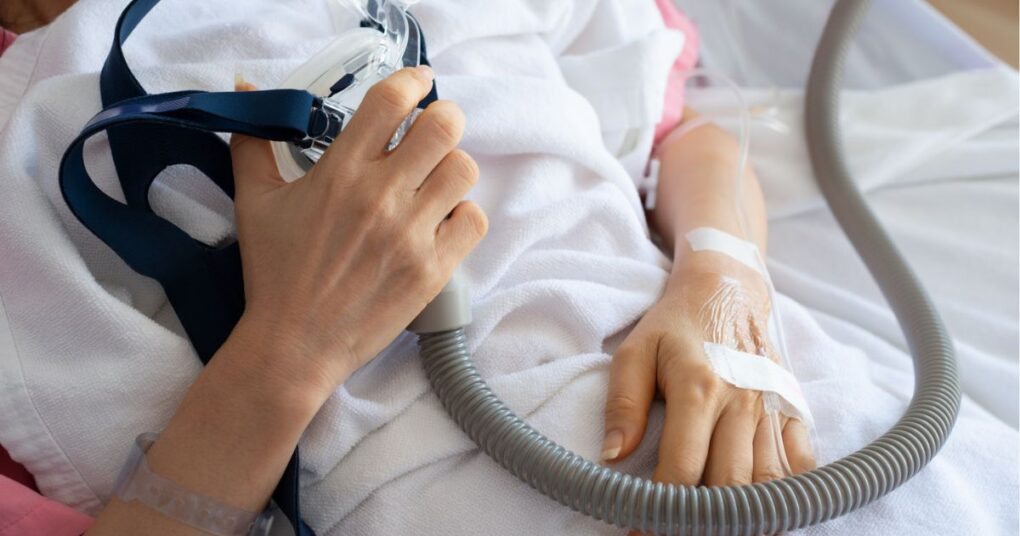
When an aging loved one needs respiratory care after a hospitalization, an experienced skilled nursing center can ease fears through careful monitoring and coordinated care. Trusting a skilled nursing center with your loved one’s breathing can feel like a leap of faith, and we don’t take that lightly at The Healthcare Center at Buck Creek.
Whether your loved one needs CPAP and BiPAP care or oxygen therapy, our attentive team will work around the clock to keep them safe and comfortable as they transition home.
Key Takeaways: What is Respiratory Care in Skilled Nursing?
- Oxygen therapy for seniors provides supplemental oxygen to bring up low oxygen levels, while CPAP and BiPAP care keep airways open.
- Post-hospital breathing support is common after surgery, pneumonia, or when chronic respiratory or neuromuscular conditions affect breathing.
- Skilled nursing respiratory support monitors oxygen and carbon dioxide levels and can help your loved one get the full benefit of CPAP or BiPAP therapy.
Table of Contents
Why Your Loved One May Need Post-Hospital Breathing Support
Oxygen Support in Rehab and Long-Term Care
CPAP and BiPAP Care in Skilled Nursing Centers
The Difference Skilled Nursing Respiratory Care Can Make
We Are Here for You Every Step of the Way
Why Your Loved One May Need Post-Hospital Breathing Support
The thought of your loved one needing respiratory support can bring up strong emotions, but breathing support isn’t a ventilator. It works with your loved one’s own breathing to deliver oxygen or keep airways open. Breathing support may be necessary if your loved one is experiencing:
- Complications of chronic obstructive pulmonary disease (COPD)
- Recovery from pneumonia
- Heart failure
- Recovery from surgery
- Obstructive sleep apnea
- Neuromuscular conditions like ALS
Some of these conditions also prevent the body from exhaling enough carbon dioxide (CO2). With careful monitoring from a skilled team, breathing support can help increase oxygen and reduce carbon dioxide levels.
Oxygen Support in Rehab and Long-Term Care
Oxygen therapy for seniors is common after surgery, especially surgery involving the heart or lungs. It’s also used when oxygen gets low because of chronic health conditions.
Your loved one may need oxygen constantly, or just during certain activities like sleep or exertion. They’ll typically receive it through a cannula, a lightweight tube with two prongs that rest in the nostrils.
The care team determines the right flow rate. If your loved one needs more than a standard cannula can deliver, a face mask provides a higher flow. Not all skilled nursing centers support higher flow rates. At Buck Creek, we can support up to 10 liters per minute.
CPAP and BiPAP Care in Skilled Nursing Centers
Oxygen isn’t always needed for respiratory support. Sometimes, the problem is obstructed breathing. For example, sleep apnea causes the throat to relax and block the airway during sleep. Obstructed breathing can also happen after surgery. CPAP and BiPAP care use air pressure to hold the airway open.
CPAP stands for continuous positive airway pressure. It delivers this pressurized air through a mask worn over the nose, mouth, or both. CPAP care is the most common treatment for sleep apnea. BiPAP stands for Bilevel Positive Airway Pressure. The setup is similar to CPAP, but it delivers air at two different pressure levels:
- Higher pressure during inhales
- Lower pressure during exhales
BiPAP is used when someone has trouble exhaling against the pressure of a CPAP machine, often because of a chronic condition alongside sleep apnea.
A skilled nursing center can help your loved one start CPAP or BiPAP care or recalibrate it during post-hospital recovery.
If your loved one struggles with CPAP or BiPAP, you’re not alone. Many people find it hard to sleep with it, especially at first. A caring skilled nursing team can help by making adjustments to the mask and implementing an adjustment period.
The Difference Skilled Nursing Respiratory Care Can Make
Oxygen therapy in seniors requires monitoring to calibrate flow rates and detect carbon dioxide (CO2) buildup. A watchful care team can catch rising CO2 levels before they cause harm.
When it comes to CPAP and BiPAP, monitoring your loved one overnight can be impractical at home. This can cause real anxiety. In skilled nursing, someone is always there to notice breathing problems and find solutions that work.
When your loved one is receiving treatment for other conditions alongside senior pulmonary care, an interdisciplinary care team can offer a unified approach, so one treatment doesn’t interfere with another. At Buck Creek, our interdisciplinary care team includes attending physicians, nurse practitioners, social workers, and case managers who meet daily.
We Are Here for You Every Step of the Way
When your loved one needs respiratory support after hospitalization, our team in Alabaster, Alabama is here to provide clinical support with comfort and quality of life in mind. Our advanced capabilities let us offer up to ten liters of oxygen per minute, plus CPAP and BiPAP therapy. We can also provide more complex breathing support, like tracheostomy care.
At Buck Creek, it’s not just about the medical services, but the people who deliver them. We’ll treat you and your loved one like family and deliver medical care with heart. We’d love to answer your questions. Contact us today to learn more or schedule a tour.